

The speed at which a glass grinding machine can complete a grinding task is a crucial factor for many industries that rely on precision glass components. As a trusted supplier of glass grinding machines, we understand the significance of this metric and are committed to providing our customers with high - performance equipment that meets their production needs. In this blog, we will explore the various factors that influence the grinding speed of a glass grinding machine and provide insights into how our machines can offer efficient solutions.
Factors Affecting the Grinding Speed
1. Glass Type and Thickness
Different types of glass have distinct physical properties, which significantly impact the grinding speed. For instance, soda - lime glass is relatively softer compared to borosilicate glass. Softer glasses are generally easier to grind, allowing the machine to work at a faster pace. On the other hand, borosilicate glass, known for its high thermal resistance and hardness, requires more time and precision during the grinding process.
The thickness of the glass also plays a vital role. Thicker glass necessitates more material removal, which in turn takes longer. A thin sheet of glass might be ground in a matter of minutes, while a thick slab could require hours of continuous grinding. Our glass grinding machines are designed to handle a wide range of glass types and thicknesses, with adjustable settings to optimize the grinding speed based on the specific material.
2. Grinding Wheel Specifications
The grinding wheel is the heart of the glass grinding machine. Its abrasive material, grain size, and bond type all affect the grinding speed. Abrasive materials such as diamond are extremely hard and are ideal for grinding tough glasses. They can remove material quickly, thereby increasing the grinding speed.
The grain size of the grinding wheel is another critical factor. Coarser grains are more aggressive and can remove material at a faster rate, but they may also leave a rougher surface finish. Finer grains, on the other hand, provide a smoother finish but take longer to grind. Our machines come with a variety of grinding wheels, allowing customers to choose the most suitable one for their specific application and desired balance between speed and finish.
3. Machine Design and Power
The design and power of the glass grinding machine itself are fundamental to its grinding speed. A well - designed machine with a robust structure can maintain stability during high - speed grinding, preventing vibrations that could slow down the process or cause inaccuracies.
High - power motors are capable of driving the grinding wheel at higher speeds, enabling faster material removal. Our glass grinding machines are engineered with advanced technology and high - power motors to ensure efficient and rapid grinding operations. Additionally, our machines are equipped with intelligent control systems that can automatically adjust the grinding parameters to optimize the speed while maintaining the required precision.
4. Desired Surface Finish
The level of surface finish required for the glass component is a significant factor in determining the grinding speed. A rough finish can be achieved much faster than a highly polished finish. For applications where a smooth, mirror - like finish is necessary, multiple grinding and polishing steps are often required, which naturally increase the overall processing time.
Our company offers a range of complementary machines, such as the CNC Glass Polishing Machine, which can work in tandem with our grinding machines to achieve the desired surface finish efficiently.
Real - World Examples of Grinding Speeds
In a typical production environment, our glass grinding machines can achieve impressive results. For a standard 3 - millimeter thick soda - lime glass sheet, with a medium - coarse grinding wheel and a moderately aggressive grinding setting, our machine can complete a basic grinding operation in about 5 - 10 minutes per square meter.
However, for a more complex task, such as grinding a 10 - millimeter thick borosilicate glass with a high - precision finish, the time can extend to several hours per square meter. These estimates are based on real - world testing and can vary depending on the specific requirements of the project.

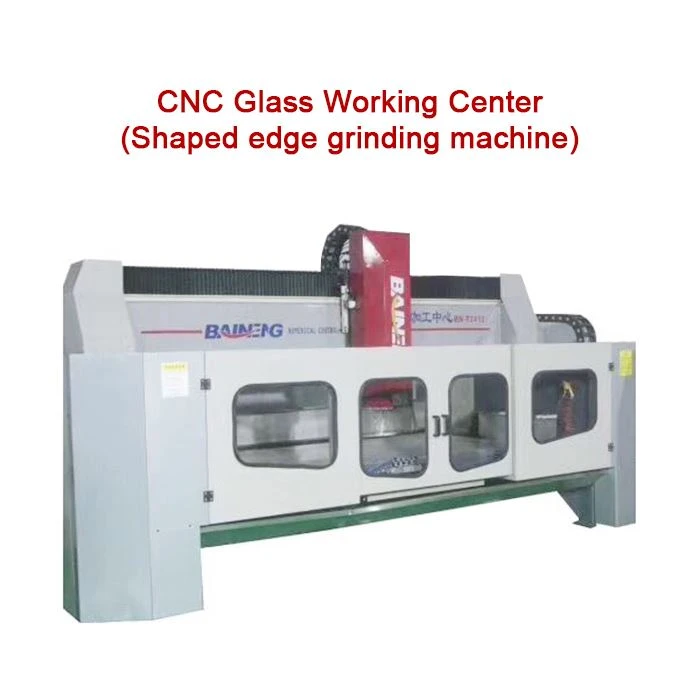
Our Comprehensive Glass Processing Solutions
As a leading supplier of glass grinding machines, we not only focus on the grinding speed but also offer a comprehensive range of glass processing solutions. Our CNC Glass Cutting Machine provides precise and efficient glass cutting, which is often a pre - step before grinding. This machine can cut glass with high accuracy, reducing the time and effort required for subsequent grinding operations.
In addition, our CNC Milling Glass service offers a high - precision milling option for creating complex shapes and patterns on glass. By integrating these different machines and services, we can help our customers streamline their glass processing workflow and improve overall productivity.
Contact Us for Your Glass Grinding Needs
If you are in the market for a high - performance glass grinding machine or other glass processing equipment, we invite you to get in touch with us. Our team of experts is ready to assist you in selecting the most suitable machine for your specific requirements. We can provide detailed information about the grinding speed, performance, and pricing of our products. Whether you are a small - scale workshop or a large - scale manufacturing plant, we have the right solution for you.
References
- "Handbook of Glass Manufacturing Technology" - This comprehensive reference book provides in - depth knowledge about glass properties, processing techniques, and the latest advancements in glass manufacturing.
- "Industrial Glass Processing: Principles and Applications" - A valuable resource that covers various aspects of glass processing, including grinding, cutting, and polishing, with a focus on industrial applications.