

The assembly precision of the glass carving machine is mainly reflected in the parameters such as the verticality between the axes of the equipment, the flatness, the positioning accuracy, and the repeated positioning accuracy. So how to check these accuracy? The methods are as follows:
The verticality between axes mainly affects the dimensional accuracy of the workpiece. The typical performance when the verticality of the XY axis is large is that the diagonals of the rectangle are not equal. The typical performance of the large verticality of the Z axis and the XY plane is when the plane is milled with a large distance between flat blades , The surface is not flat; the flatness mainly affects the difficulty of leveling the plate and the workpiece. Generally, after the machine is assembled and debugged, the table of the mobile glass carving machine should be milled to ensure the flatness. The positioning accuracy affects the dimensional error of the workpiece, which mainly depends on the accuracy of the screw, the compensation capacity of the control system, and changes in ambient temperature.
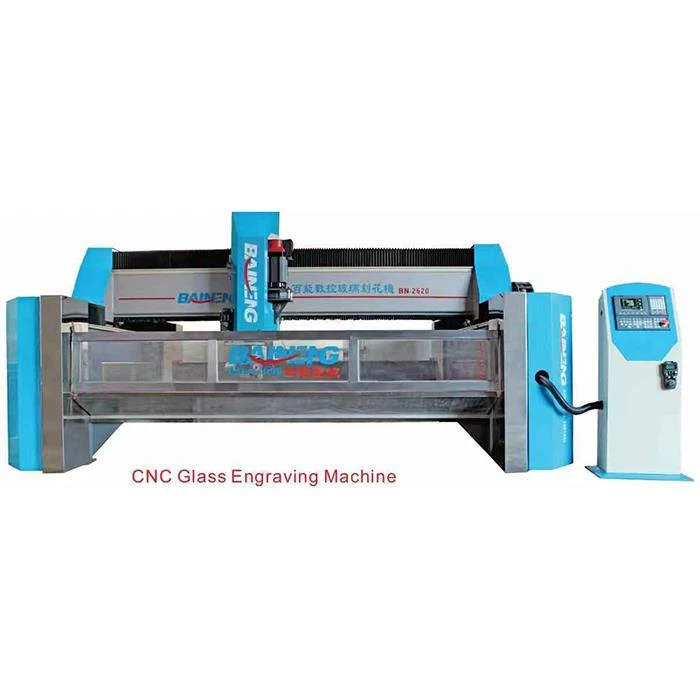
When the processing range exceeds 300 mm, the effect of positioning accuracy on the size of the workpiece must be considered; repeated positioning accuracy mainly affects multi-tool processing and multi-process processing. Mobile glass engraving machine is generally driven by roller screws without creeping and micro feed can be realized. Repeat positioning accuracy is mainly determined by control accuracy. Rack-driven glass engraving machines are less accurate than lead screw-driven glass engraving machines. Only when the above-mentioned indicators meet the requirements can it be regarded as a qualified mobile glass carving machine.
These precisions are mutually restricted and affect each other. Failure to meet one standard will affect the other precision of the machine. If the machine does not meet the standards, then the processed products will certainly not be more precise. We must learn to distinguish, so that we can not only select good products, but also not worry about problems in our subsequent mass production.