

As a supplier in the CNC glass etching business, I've seen firsthand the amazing capabilities of this technology. It's used in various industries, from creating intricate designs on decorative glassware to precision markings on industrial glass components. But like any technology, it's not without its limitations. In this blog, I'll share some of the challenges and drawbacks that come with CNC glass etching.
Material Limitations
One of the first limitations we encounter is related to the type of glass we can work with. Not all glasses are created equal when it comes to CNC etching. Some glasses have a composition that makes them more difficult to etch cleanly. For example, tempered glass is a no - go for traditional CNC etching methods. Tempered glass is treated to be stronger, but this process also makes it prone to shattering when etched. If you try to etch tempered glass using a standard CNC glass etching machine, you're likely to end up with a broken piece of glass instead of a beautifully etched design.
Another issue is the thickness of the glass. Extremely thin or thick glasses can pose problems. Thin glass, say less than 1mm, can be difficult to hold in place during the etching process. It's so delicate that the vibrations from the Glass Carving Machine can cause it to crack or break. On the other hand, very thick glass, over 20mm, may require a lot of time and energy to etch. The etching depth may also be inconsistent, as the tool has to work through a greater volume of glass.
Design Limitations
When it comes to design, CNC glass etching has its boundaries. Intricate and highly detailed designs can be a challenge. The resolution of the etching is limited by the size of the etching tool and the precision of the machine. If you want to create designs with extremely fine lines or small details, you may find that the machine can't reproduce them accurately. For instance, a design with lines thinner than 0.1mm may be difficult to etch clearly, resulting in a blurry or incomplete image.
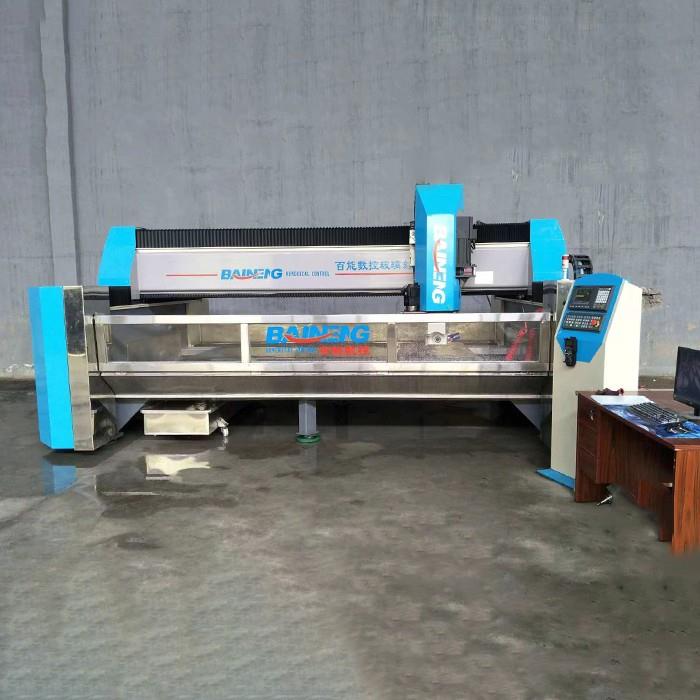

Complex 3D designs are also a bit of a struggle. While CNC glass etching machines can create some basic 3D effects, truly complex and realistic 3D models are hard to achieve. The etching process is mainly a surface - based operation, and creating deep, multi - level 3D designs requires a lot of additional steps and may not be cost - effective.
Production Speed and Efficiency
Production speed is another limitation. CNC glass etching is a relatively slow process, especially when compared to some other manufacturing techniques. The machine has to move the etching tool precisely over the glass surface, and this takes time. If you have a large order of glass items with detailed designs, the production time can be quite long. This can be a problem for customers who need their products quickly.
In addition, the efficiency of the machine can be affected by various factors. For example, the type of etching tool used can wear out over time, which means it needs to be replaced. Changing the tool takes time and can disrupt the production process. Also, if the machine is not properly maintained, it may experience breakdowns, further reducing production efficiency.
Cost Limitations
Cost is a major factor in any manufacturing process, and CNC glass etching is no exception. The initial investment in a CNC Glass Engraving and Polishing Machine is quite high. These machines are complex pieces of equipment that require advanced technology and precision engineering, so they come with a hefty price tag.
On top of that, the operating costs can add up. The etching tools need to be replaced regularly, and they can be expensive. The energy consumption of the machine is also significant, especially if you're running it for long periods. And if you need to use special software for design and programming, that's another cost. All these factors can make the final product quite expensive, which may limit its marketability.
Environmental and Safety Limitations
CNC glass etching also has some environmental and safety concerns. The etching process often involves the use of chemicals, such as acids, to create the etched effect. These chemicals can be harmful to the environment if not disposed of properly. They can also pose a risk to the health of the workers. If the workers are not properly protected, they may be exposed to fumes or splashes from the chemicals, which can cause skin irritation, respiratory problems, or other health issues.
In addition, the dust generated during the etching process can be a problem. Glass dust is fine and can be inhaled, which is not good for the lungs. Special ventilation systems need to be in place to remove the dust from the work area, and this adds to the overall cost of the operation.
Surface Finish Limitations
The surface finish of the etched glass may not always meet the desired standards. After etching, the surface may have a rough or uneven texture. This can be a problem, especially if the glass is intended for applications where a smooth surface is required, such as in display cases or optical lenses.
The color and appearance of the etched area can also vary. Sometimes, the etched area may have a slightly different color or shade compared to the rest of the glass. This can be due to factors such as the type of glass, the etching process, and the chemicals used. Achieving a consistent and uniform surface finish and color can be a challenge.
Compatibility with Other Processes
CNC glass etching may not always be compatible with other manufacturing processes. For example, if you want to combine CNC etching with other surface treatments, such as coating or painting, it can be difficult to get the right result. The etching process can affect the adhesion of the coating or paint, leading to peeling or uneven application.
Also, if you need to integrate the etched glass into a larger assembly, the dimensional accuracy of the etched glass may be a concern. Small variations in the size or shape of the etched glass can cause problems when trying to fit it into the assembly.
Despite these limitations, CNC glass etching is still a valuable technology with many applications. At our company, we're constantly working on ways to overcome these challenges. We're researching new materials that are more suitable for etching, improving the design software to create more complex designs, and finding ways to increase production speed and efficiency.
If you're interested in learning more about CNC glass etching or have a project in mind, we'd love to hear from you. We can discuss your specific requirements and see how we can work together to achieve the best results. Whether you need a small batch of custom - etched glassware or a large - scale production of industrial glass components, we're here to help.
References
- Glass Industry Handbook: A comprehensive guide to glass manufacturing and processing.
- Journal of Precision Engineering: Articles on the latest advancements and limitations in CNC machining technologies.
- Safety Guidelines for Chemical Use in Glass Etching: Published by relevant industry safety organizations.